Accelerate Prism Measurement
Know What’s Changing Seller Performance—And What It’s Worth
Accelerate Prism ties observed capability to the pipeline and revenue it moves.
See Accelerate Prism in Action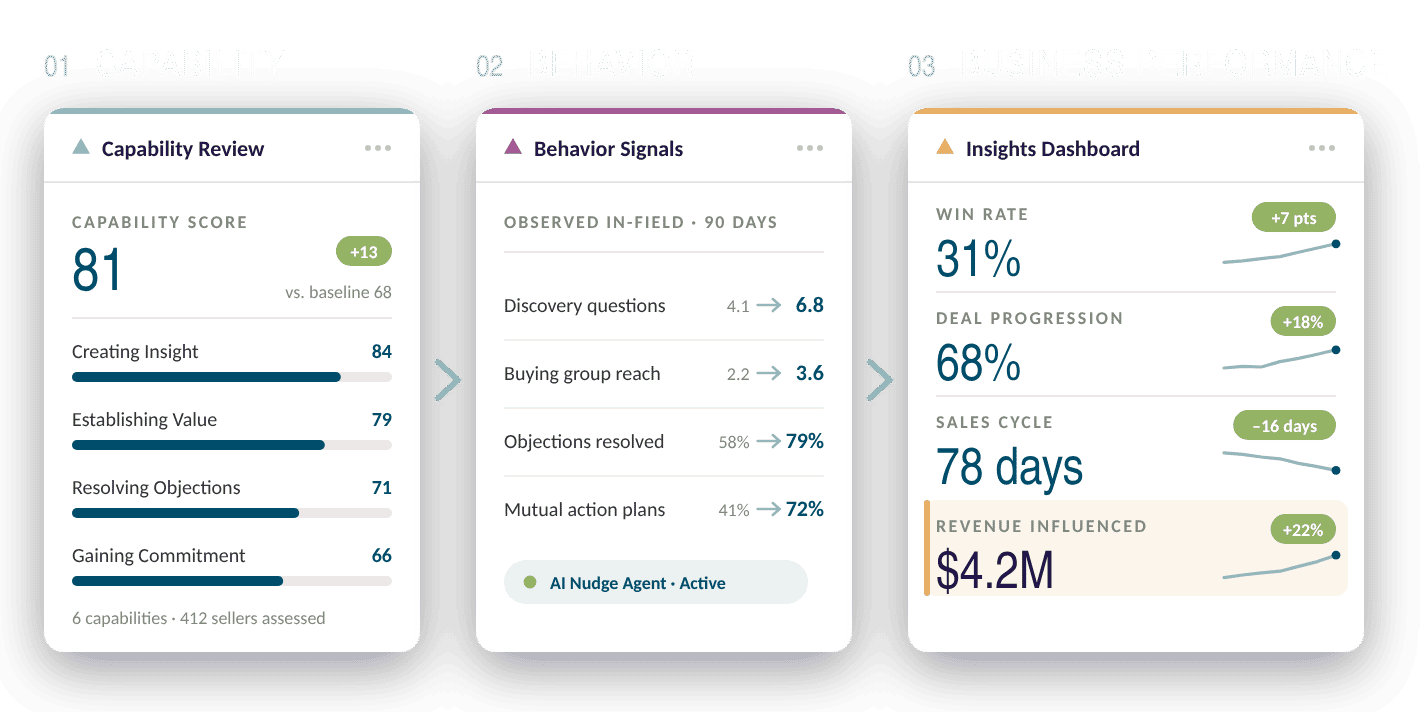
A Clear Line of Sight:
Training Investment → Behaviour Change → Business Impact

Most organisations can tell you who completed training. Far fewer can tell you whether sellers actually got better—and whether that improvement changed business performance.
Accelerate Prism connects capability development to observable seller behaviour and the sales outcomes your business already measures.
Leaders can see where capability is improving, whether new behaviours are taking hold, how those behaviours relate to performance, and where to focus next.

Discover how leading enablement teams connect training to business objectives, personalise development, reinforce learning in the flow of work, and measure the behaviours that drive results.
Sales Training Should Be Accountable to Business Performance
You invest in seller development for a reason: you need something in the business to change.
But traditional training measurement often stops long before it gets there.
Completion rates tell you who participated. Satisfaction surveys tell you whether people liked the experience. Knowledge checks tell you whether they learned something.
None of those answers the question revenue leaders ultimately care about: Did sellers change how they sell—and did it improve performance?
Richardson Sales Performance built Accelerate Prism to answer that question.
The Missing Link Has Always Been Seller Behaviour
Most organisations already have plenty of data.
- The LMS knows who completed training.
- The CRM knows which opportunities advanced and closed.
- Conversation intelligence captures customer interactions.
- Enablement platforms track activity and content.
What has been much harder to see is the connection between them.

Richardson Sales Performance closes that gap by defining the observable behaviours that effective selling requires, measuring whether sellers are developing and applying them, and connecting that evidence with commercial performance.
Instead of looking at learning data and sales data as two separate stories, Accelerate Prism brings them together.
That is the foundation of our measurement approach.
Learn about the sales capabilities your team needs to build to compete in today’s market.
How Do You Prove Sales Training Is Working?
Not with one metric.
You need a chain of evidence.

Richardson Sales Performance’s measurement approach follows the logic of the Kirkpatrick Model—Reaction, Learning, Behaviour and Results—but goes further by connecting those measures throughout the development journey.
The goal is not simply to measure where sellers are.
It is to measure what changes.
Where are sellers starting?
Capability benchmarks, behavioral assessments and relevant performance data
The strengths and gaps development needs to address
Did they learn?
Baseline and post-learning scenarios, knowledge checks, and retention data
Whether capability improved
Can they do it?
Realistic AI Roleplay evaluated against Richardson Sales Performance and Challenger behaviors
Whether sellers can demonstrate the skill
Are they selling differently?
Recurring capability reviews, manager input, reinforcement and available workflow signals
Whether learning is transferring into sustained behavior
Is it improving performance?
Behavioral and capability data connected with CRM and revenue metrics
Whether stronger execution is translating into better business outcomes
1. Establish Where Sellers Are Starting
You cannot prove improvement without a baseline. Accelerate Prism begins by establishing seller capability across the behaviours that matter most for the role, methodology and selling environment. A structured Capability Review provides a baseline of seller proficiency and behavioural frequency. Manager perspective and available CRM performance data can strengthen that view.
Sellers also complete short, realistic scenarios before learning specific behaviours. That creates another important benchmark: how well they can apply what they know before development begins. Together, those inputs show where capability is strong, where gaps exist and where development should focus.
Without a baseline, you know where someone finished. With one, you can prove how far they moved. The Richardson Sales Performance framework deliberately measures sellers at multiple points so leaders see a trajectory of change rather than a single snapshot.
2. Prove Learning—Not Participation
Participation is not progress. Accelerate Prism measures learning as it happens through scenario-based assessments and knowledge checks tied directly to the selling behaviours being developed.
Comparable scenarios before and after learning show whether proficiency actually increased. Ongoing spaced reinforcement then revisits those skills over time, providing evidence that learning was retained rather than temporarily acquired. So the question moves beyond: Did they complete it? What did they learn—and did it stick?
3. See Whether Sellers Can Actually Do It
There is a critical difference between understanding a skill and executing it when the pressure is on. Accelerate Prism’s AI Roleplay makes that difference measurable. Sellers practise realistic situations based on the buyers, solutions, objections and challenges they actually encounter.
They have to put Consultative Selling or Challenger behaviours into practice, not simply answer questions about them. Methodology-specific scorecards then evaluate what the seller demonstrated.
Sellers immediately see what worked, what they missed and what to improve. They can adjust and try again. Managers gain a much clearer view of where coaching will have the greatest impact.
AI Roleplay turns practice into observable evidence of seller readiness.
And unlike generic AI simulations, Richardson Sales Performance does not leave AI to decide what “good selling” looks like. Our methodologies define the behaviours. AI makes those behaviours scalable to practise, observe and measure. That creates a powerful bridge between learning the methodology and being ready to execute it when a real buyer is on the other side of the conversation.
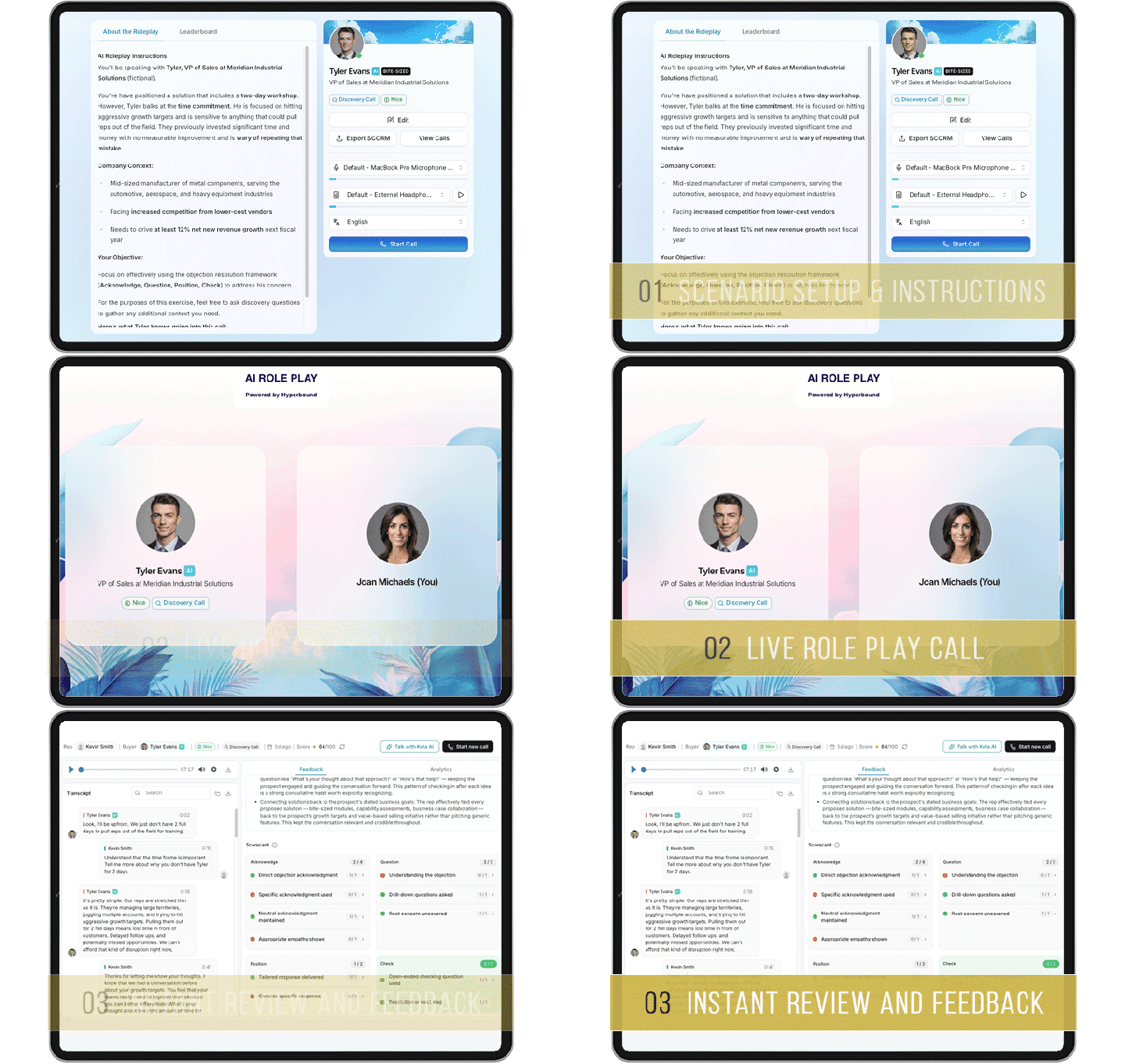
Experience an AI Roleplay for yourself.
4. Know Whether Behaviour Is Changing in the Field
Learning matters only if it changes execution. That is why Richardson Sales Performance measures capability repeatedly, not just immediately after training.
Approximately 60–90 days into development, another Capability Review can show whether new skills are beginning to transfer into day-to-day selling. Manager input provides additional calibration. Measurement continues through the development journey, creating a behavioural trajectory rather than a before-and-after snapshot.
Where available, evidence from CRM, workflow tools, coaching activity, conversation intelligence, and other revenue systems can strengthen the picture. The result is a much more important answer than whether someone passed training:
Are sellers actually selling differently? And because the data is tied to specific behaviours, managers can see where execution is improving—and precisely where it is not.
5. Connect Better Selling to Better Business Results
This is where measurement becomes ROI. Accelerate Prism connects capability and behavioural evidence with the commercial outcomes your organisation already tracks. Depending on what the business is trying to change, those measures can include:
- Win rate
- Opportunity creation and conversion
- Pipeline progression and velocity
- Sales cycle length
- Deal size or contract value
- Quota attainment
- New account acquisition
- Customer retention and expansion
- Margin
- Revenue
The objective is not simply to show that a business metric improved sometime after training.
Sellers developed the capability. They demonstrated stronger execution.
The behaviour became more consistent. Business performance improved.
That is how Accelerate Prism proves the ROI of sales training.
Prism’s Signal capability brings these sources of evidence together so leaders can identify relationships between seller capability, execution and results—and see where further development can make the greatest difference.
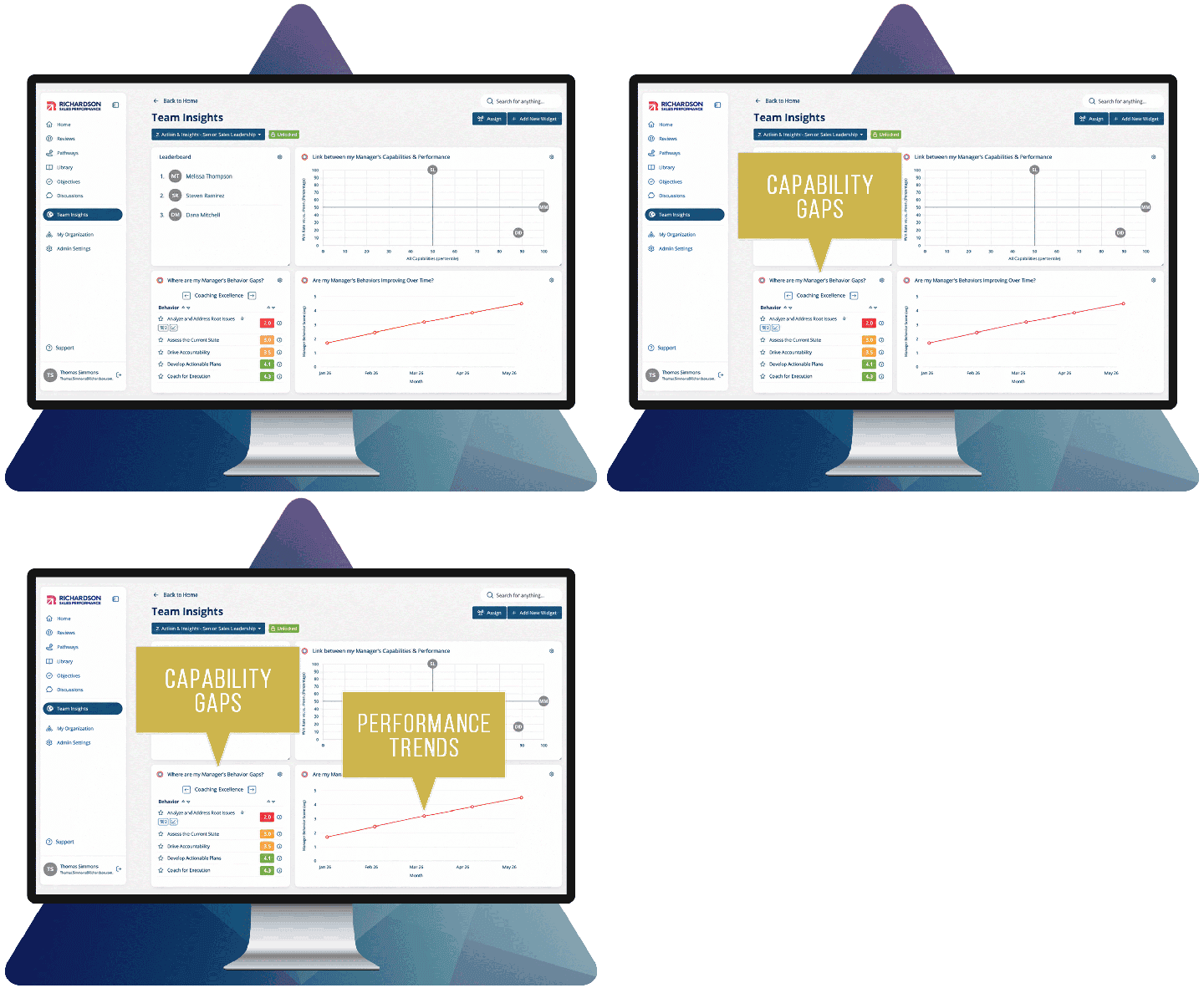
Learn about the KPIs that reveal the effectiveness of sales training.
Measurement Should Tell You What to Do Next
A dashboard that tells you what happened is useful.
A measurement system that helps improve what happens next is much more valuable.
Accelerate Prism turns measurement back into action.
For sellers
See strengths, gaps and progress—and get more relevant development focused on what will improve performance.
For managers
Know exactly where to coach instead of relying on gut feel, recency bias or the last deal review.
For enablement leaders
See which capabilities are improving, where adoption is lagging and where development investment is generating results.
For sales leaders
Understand the connection between how teams sell and how they perform—and where changing execution can have the greatest impact on growth.
The data does not sit at the end of the journey. It improves the journey.
Measure. Develop. Apply. Improve. Measure again.
From Training Data to Commercial Evidence
Accelerate Prism is differentiated by more than its ability to measure learning. It connects the full story.
- Richardson and Challenger methodologies establish what good selling looks like.
- Assessments show where capability stands.
- Learning develops what needs to improve.
- AI Roleplay reveals whether sellers can execute it.
- Ongoing measurement shows whether the behaviour is taking hold.
- CRM and performance data show what happens to the business when it does.
Proof in practice: Veolia
Following a merger, Veolia needed a common selling approach—but it also needed evidence that the new approach was changing performance.
Richardson Sales Performance created a customised development journey for 1,255 participants across 99 workshops, supported by digital learning, CRM-integrated tools, Accelerate assessments, ongoing reinforcement, focus groups and a multi-level measurement framework.
13%
increase in opportunities created post-training
32%
increase in closed-won opportunities
$289M
in opportunities influenced through Consultative Opportunity Pursuit™
This is the difference between showing that training happened and showing that it mattered.
Read the Full Success StoryBetter Measurement Creates Better Sales Performance
For revenue and enablement leaders, measurement should answer practical business questions:
- Are sellers changing the behaviours that matter?
- Where are our biggest capability gaps?
- Where should managers coach?
- Which capabilities distinguish stronger performers?
- Where should we invest next?
- Is seller development actually moving the business?
Accelerate Prism gives organisations the evidence to answer those questions—and the intelligence to act on what they learn.
When you can connect capability to behaviour and behaviour to performance, sales development stops being an act of faith.
It becomes a measurable lever for growth.
Frequently Asked Questions About Measuring Sales Performance Improvement
Q: How do you measure whether sales training is effective?
A: Effective measurement goes beyond attendance, completion and satisfaction. It establishes where sellers start, measures whether they learn, determines whether they can apply the skills, tracks whether behavior changes over time and connects that change to relevant business outcomes. Accelerate Prism creates that evidence across the full seller development journey.
Q: How do you prove the ROI of sales training?
A: Start with the business outcome the training is intended to influence and the seller behaviors required to change it. Then establish a baseline, measure capability development, determine whether sellers can demonstrate the targeted behaviors, track whether those behaviors sustain over time and connect the change with relevant commercial metrics. The stronger the evidence linking development → behavior → performance, the stronger the ROI case.
Q: What sales training metrics matter most?
A: There is no single universal metric. The right measures depend on the business problem. They can include capability improvement, demonstrated skill application, retention, behavioral adoption, coaching activity and commercial outcomes such as win rate, pipeline conversion, sales cycle length, deal size, quota attainment, customer growth, margin and revenue. The important question is not simply what can we measure? It is what do we need sellers to do differently to change the outcome that matters?
Q: How do you measure behavior change in salespeople?
A: Behavior change is best measured over time and through multiple sources of evidence. Accelerate Prism can combine recurring capability assessments, manager input, AI Roleplay performance, reinforcement data, workflow activity and relevant CRM or revenue technology signals. This creates a trajectory of change rather than relying on one self-assessment or one point-in-time observation.
Q: How does AI Roleplay help measure sales effectiveness?
A: AI Roleplay makes skill execution observable before sellers enter critical customer situations. Sellers practice realistic scenarios and are evaluated against Richardson Sales Performance or Challenger methodology-specific behaviors. That provides evidence of what they can execute, where gaps remain and whether performance improves through practice. It strengthens the connection between knowing a skill and being ready to use it.
Q: How long does it take to know whether sales training is working?
A: Some evidence appears quickly. Pre- and post-learning assessments can show learning gain, while AI Roleplay can demonstrate improving execution through repeated practice. Behavior change takes longer. Richardson Sales Performance’s approach can include another capability assessment approximately 60–90 days into development, followed by continued measurement over time. Business impact should be evaluated according to the organization’s sales cycle and the outcomes the program is designed to influence.
Know Your Sellers Are Getting Better. Prove What It Does for the Business.
You invest in seller development because you expect performance to change.
Accelerate Prism gives you the evidence to show that it did.
Measure capability.
Make behaviour visible.
Connect execution to performance.
Know where to improve next.