How to Improve Channel Partner Productivity
Sales performance improvement

Written by: Ben Taylor, MBA, Content Marketing Manager, Richardson
Published: October 14, 2026
Many of Richardson’s clients rely on channel sales partners to generate business, either exclusively or in conjunction with direct sales resources. They often ask how they can improve the productivity of those partners.
Key Takeaways
- Low channel partner productivity typically stems from two causes: a lack of mutual understanding about expectations, and a lack of clear agreement on how the partner and the solution provider will work together to create value for customers.
- Clearly defining the role of Channel Partner Managers (CPMs) keeps them working proactively to maximize partner sales results instead of reacting to partner requests.
- A CPM’s role should reflect the type of partner they work with: sell-to, sell-through, sell-with, or hybrid.
- Success criteria differ by partner type, so each type needs a different kind of support from the solution provider.
Why Is Channel Partner Productivity Low?
We typically find that low channel partner productivity stems from two causes:
- Mismatched expectations. The channel partner, the solution provider, or both lack a mutual understanding of what to expect from the business relationship.
- No agreement on how to create value. The channel partner and the solution provider haven’t clearly agreed on how they will work together to create value for customers.
Why Does the Conversation with Partners Need to Change?
Too often, the dialogue between CPMs and their partners focuses on how much product should be sold. It is a quantitative negotiation. That is an important aspect to agree on, but without clear expectations about who will do what between a solution provider and a channel partner, the sales projections are just guesswork. Partners and providers need clear guidelines for expectations and engagement.
Why Does the Channel Partner Manager Role Matter?
For organizations that use indirect channel sales partners for all or part of their revenues, CPMs play an essential part in success. In working with our clients, we find that clients often define the CPM role too vaguely. Without clear guidance, a CPM will spend too much of their time simply reacting to partner requests instead of working proactively to develop and maximize channel partner sales results.
A CPM’s role should reflect the kinds of channel partners they work with.
What Are the Four Types of Channel Partners?
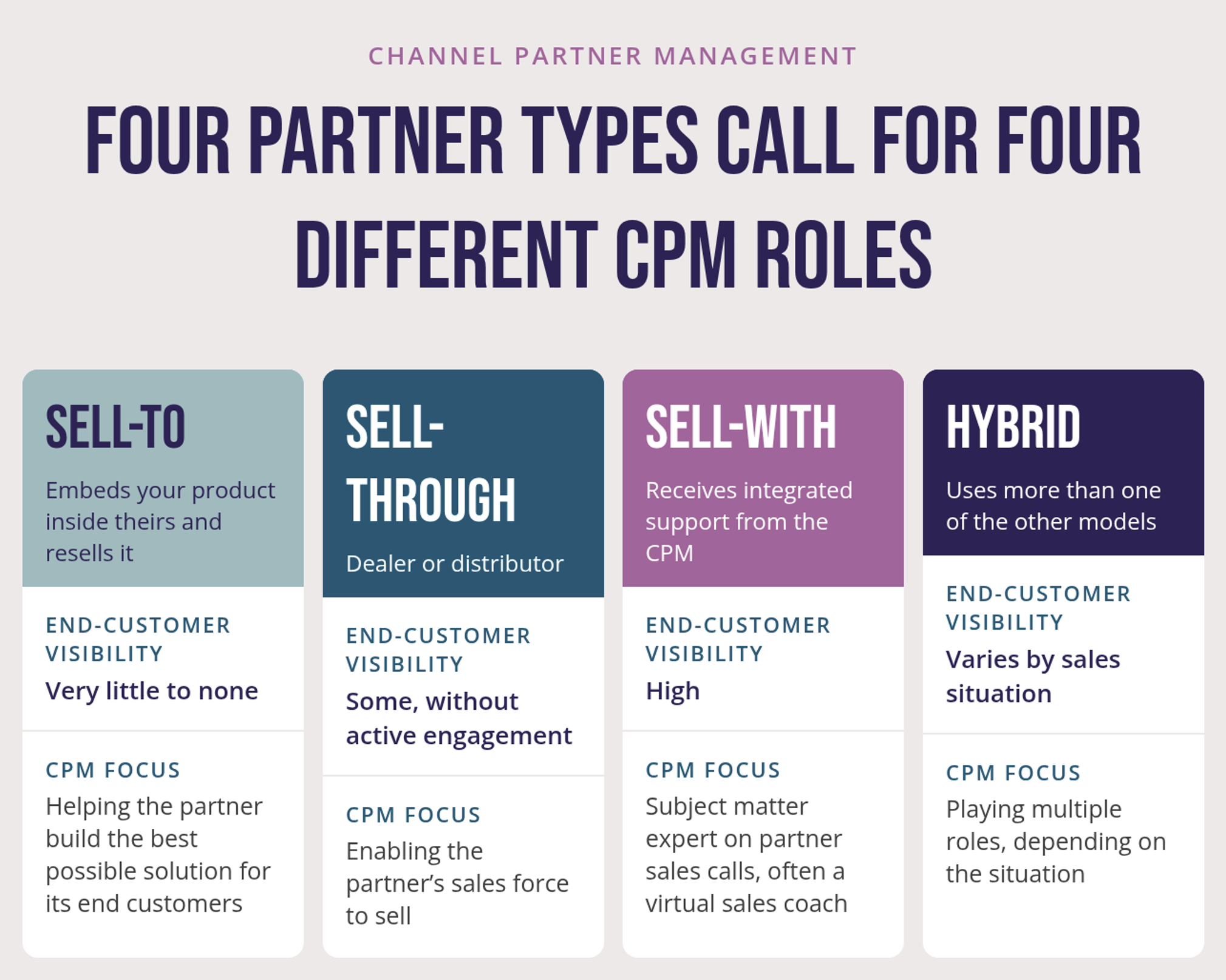
- Sell-to partners typically embed your product inside theirs and resell it. In essence, these partners are your customers, and you generally have very little to no visibility into their end customers.
- Sell-through partners are typically dealers or distributors. CPMs have some visibility into these partners’ end customers but don’t actively engage with them. Instead, CPMs working with sell-through partners generally focus on enabling their sales force to sell.
- Sell-with partners typically receive integrated support from CPMs, who have a high degree of visibility into these partners’ end customers and prospects. Sell-with partners often call in CPMs as subject matter experts on their sales calls. In many cases, the CPM also acts as a virtual sales coach to partner sellers.
- Hybrid partners use more than one of the above models, depending on the sales situation. The CPM plays multiple roles in support of those partners.
The four partner types at a glance:
| Partner type | Typical partner | CPM visibility into end customers | CPM focus |
|---|---|---|---|
| Sell-to | Embeds your product inside theirs and resells it; in essence, your customer | Very little to none | Helping the partner build the best possible solution for its end customers |
| Sell-through | Dealer or distributor | Some, but CPMs don’t actively engage end customers | Enabling the partner’s sales force to sell |
| Sell-with | Partner whose sales team the CPM supports in an integrated role | High | Acting as subject matter expert on partner sales calls; often a virtual sales coach |
| Hybrid | Partner that uses more than one of the above models | Varies by sales situation | Playing multiple roles, depending on the sales situation |
How Should You Define Success for Each Partner Type?
A CPM’s success criteria will differ based on the type or types of partners they work with.
- Sell-to partners: Provide expertise and help the partner build the best possible solution, one that would be most appealing to their end customers, while being equipped to go out and sell it. Know how your partner differentiates their solutions. The attributes of your product that support that differentiation will matter most to them, whether that is low cost, high reliability, or some other value metric.
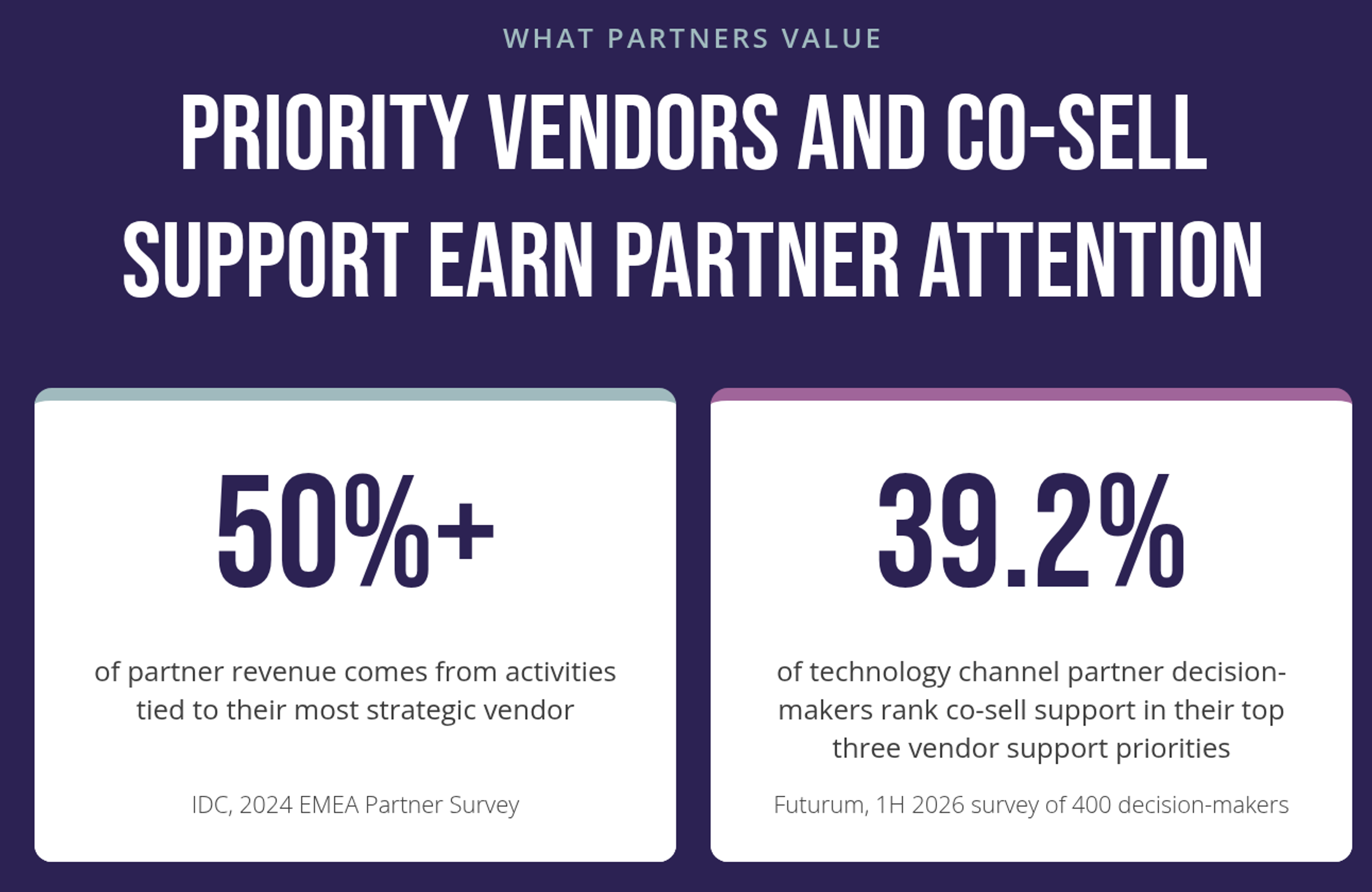
- Sell-through partners: They probably also sell other companies’ products, so you are competing for their attention. You need to capture their hearts and minds so they feel more comfortable and better equipped to sell your offerings. They need to understand how selling your capabilities enables them to make money. It also helps if they see you as the easier one to do business with. Recognize that you are in a competitive situation and emphasize your relative advantages over other solution providers. IDC’s 2024 EMEA Partner Survey found that partners derive more than half of their total revenue from activities connected to their most strategic vendor, so earning a spot among a partner’s priority vendors matters.
- Sell-with partners: Work with them to identify the optimum situations for you to collaborate and define the rules of engagement. Understanding your channel partner’s selling process — or, if they don’t have one, suggesting a buyer-aligned sales process to them — will help you know when to engage most effectively in support of winning their opportunities. In the technology channel, partners tend to welcome this kind of help. In Futurum’s 1H 2026 survey of 400 technology channel partner decision-makers, co-sell support ranked first among 10 vendor support priorities, cited in the top three by 39.2% of respondents.
- Hybrid partners: Define the different types of sales situations the partner encounters and agree on how and when you can best help. This matters because most partners now operate multiple business models that span sell, service, and build roles, according to IDC’s 2024 EMEA Partner Survey.
CPMs can work with one or more types of partners, depending on the channel strategy and partner programs. Understanding what kinds of partners your organization works with is fundamental to knowing how to best support them, and is critical to the success of CPMs.